
- Major ActivitiesMajor ActivitiesThe Northeast Asian History
Foundation is the center of
Northeast Asian history research - ResourcesResourcesThe Northeast Asian History
Foundation is the center of
Northeast Asian history research - NewsNewsThe Northeast Asian History
Foundation is the center of
Northeast Asian history research - IntroductionIntroductionThe Northeast Asian History
Foundation is the center of
Northeast Asian history research
-
Screen size
-

- Major Activities
- Resources
- News
- Introduction
- Website Guide
Resources
Publication
- Date 2011.10.11
- Hit 1826
1. Northeast Asian History Foundation holds the copyright on the files included in this website.
2. No part of them shall be reproduced in any form or by any means without permission.
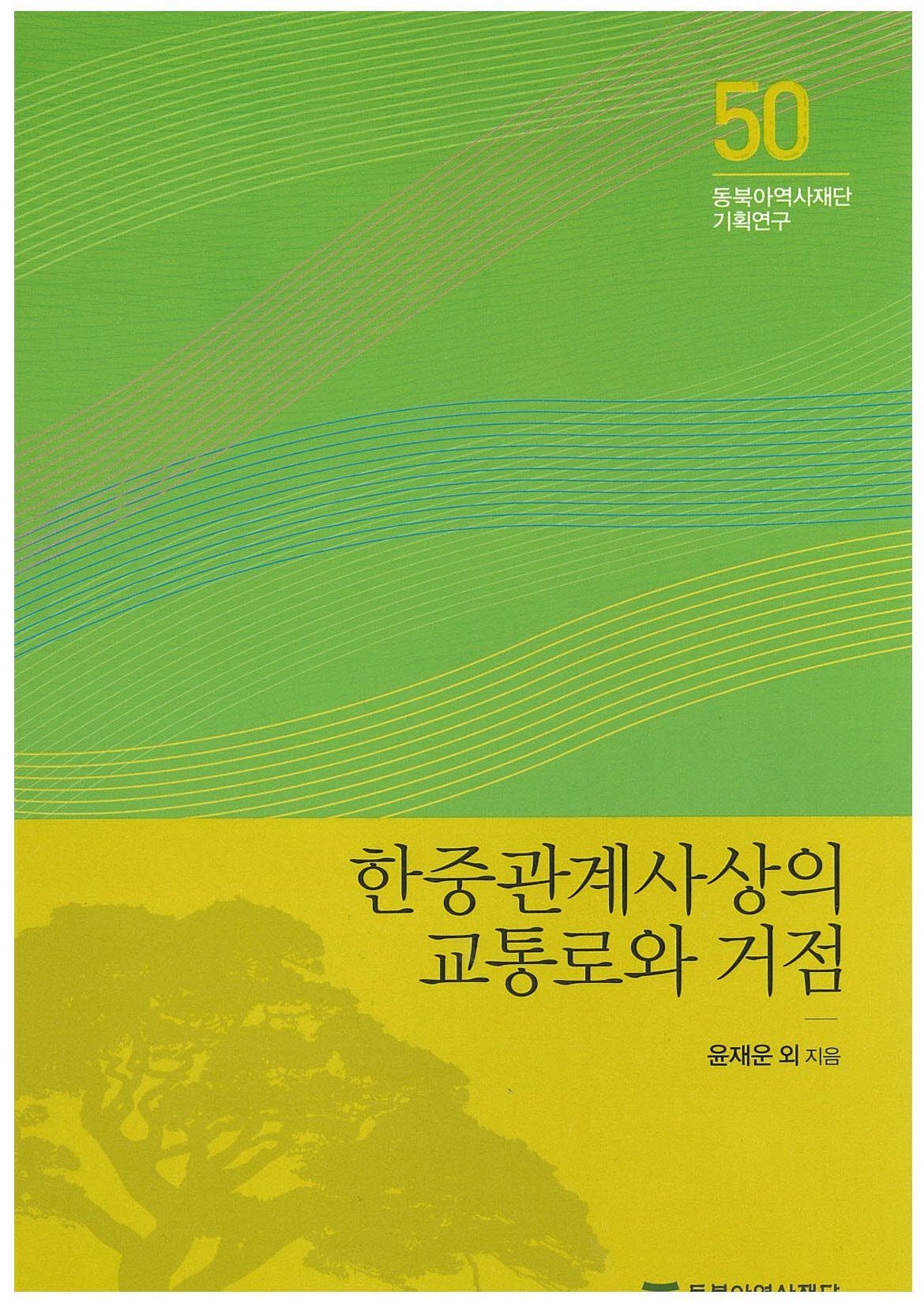
Title : 《Travel Routes and Hubs in the History of Korean-Chinese Relations》
(No. 50 in a project research series by Northeast Asian History Foundation)
Authored by YUN Jae Woon et al.
Northeast Asian History Foundation | Printed on A5 | 329 pages | 13,000 Won each | 2011.06.29
ISBN 978-89-6187-240-9 93910
This is the fruit of a research on the history of Korea-China relations in different periods, looking at it in terms of travel routes and hubs. Traditionally, researches on the history of Korea-China relations tended to assume that Korea and China could be understood as separate and complete nation states, and therefore tended to put focuses on exchanges and influences between the two. In his perspective, travel routes and hubs are no more than linking tools between the two countries. However in old periods, travel routes and hubs were neural networks and intermediaries in East Asia not just linking Korea and China but linking each of the nations and states. When political situations changed, these travel routes and hubs turned straight into battle grounds or arenas of competition causing conflicts, to tell the truth. In addition, if we look at the cultural side, certain areas developing around travel routes and hubs came to have a mixture of cultures, which sometimes brought out new cultures accordingly. Having these problems on the basis, this book looks at travel routes such as Yuseong~Muryeo(無廬), Suzi River(蘇子河) Basin Route, Yangpyeong, the Yellow Sea sea route, and 7 hubs including Deungju, Shenyang(瀋陽), Andong in the context of the characteristics of the then period. One of the features of this book is that it pays special attention to people living on the travel routes or in the travel hubs from the viewpoint of post-nationalism.
