
- Major ActivitiesMajor ActivitiesThe Northeast Asian History
Foundation is the center of
Northeast Asian history research - ResourcesResourcesThe Northeast Asian History
Foundation is the center of
Northeast Asian history research - NewsNewsThe Northeast Asian History
Foundation is the center of
Northeast Asian history research - IntroductionIntroductionThe Northeast Asian History
Foundation is the center of
Northeast Asian history research
-
Screen size
-

- Major Activities
- Resources
- News
- Introduction
- Website Guide
Resources
Publication
- Date 2012.08.23
- Hit 1808
1. The Northeast Asian History Foundation owns the copyright to files located on this homepage.
2. Unauthorized reproduction and copying in any way or form are prohibited.
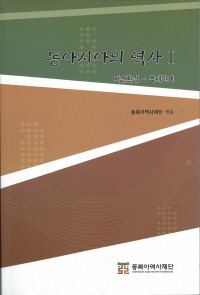
Book Title: East Asian HistoryⅠ: Natural Environment - International Relations
Northeast Asian History Foundation | 148mm x 225mm | Single Volume Edition | 434 pages |6,000 won | December 15, 2011
ISBN
978-89-6187-255-3 94910
Foreword
Chapter 1 The Beginning of East Asian History-From Prehistoric Times to Years around Christ
1. The Natural Environment of East Asia_ KIM Jung Bae (金貞培)
Ⅰ. Introduction
Ⅱ. The Natural Environment during the Old Stone Age
Ⅲ. The Advent of the Human Race in East Asia
Ⅳ. Life and Exchange in East Asia during the Old Stone Age
Ⅴ. Tools during the Old Stone Age
Ⅴ. Tools during the Old Stone Age
2. Prehistoric Culture_ LIM Sang Taek (林尙澤)
Ⅰ. The Classical Concept of the New Stone Age, and the New Stone Age in East Asia
Ⅱ. The Location and Time Frame of the New Stone Age in East Asia
Ⅲ. The Advent of Earthenware and the Beginning of the New Stone Age
Ⅳ. The Development of the New Stone Age Culture in East Asia
3. The Origin of Civilization and the Formation of States in East Asia_ LEE Chung Kyu (李淸圭)
Ⅰ. Introduction
Ⅱ. Civilization and States
Ⅲ. Archaeological Culture in the Middle Region
Ⅲ. Archaeological Culture in the Middle Region
Ⅴ. Archaeological Culture in the Eastern Region
Ⅵ. The Civilization of East Asia and Transition to Early States
Ⅶ. Conclusion
4. The Establishment and Development of States_ KIM Byung Joon (金秉駿)
Ⅰ. Introduction: “East Asia” and the Concept of “State”
Ⅱ. Myths and Early States
Ⅲ. The Formation of Early States in Various Forms
Ⅳ. The Development of Early States
Ⅴ. The Formation of Ancient States
Ⅵ. Conclusion
Chapter 2 Human Migration and the Exchange of Cultures -From Years around Christ to the 10th Century AD
1. Comments on Description in the “Human Migration between Regions and War” Section- LEE Seong Je (李成制)
Ⅰ. Introduction
Ⅱ. Two Viewpoints Necessary to Understand Human Migration and the Formation of the East Asian World
Ⅲ. The Inflow of Chinese County and Prefecture Powers and Koguryo/the Three Han States
Ⅳ. Immigrants from Sixteen Kingdoms and Five Ethnic Groups and North and South Dynasties, and Koguryo/Baekje
Ⅴ. Conclusion: On the Formation of the Ancient World of East Asia
2. Ancient Buddhism_ CHOE Yeon Shik (崔鉛植)
Ⅰ. Introduction
Ⅱ. The Introduction and Acceptance of Buddhism (1st to 3rd Centuries AD)
Ⅲ. The Establishment and Spread of the National Buddhism System across East Asia (4th to 6th Centuries AD)
Ⅳ. Buddhist Thinking and Faith during the 4th to 6th Centuries AD
Ⅴ. The Social Spread and Development of Buddhism as a General Discipline (7th to 8th Centuries AD)
Ⅵ. The Decline of the Studies of Teaching and Learning, and the Development of Practical Buddhism (9th to 10th Centuries AD)
Ⅶ. Conclusion
3. Control Systems based on Ordinance and Confucianism_ JEON Deog Jae (全德在)
Ⅰ. The Control Systems of Wei, Chin, and the South & North Dynasties and the Sui and Tang Dynasties
Ⅱ. The Control Systems of the Three Kingdoms and Unified Silla
Ⅲ. The Control System of the Ancient Ritsuryou-State of Japan
4. International Relations in Ancient East Asia and Tribute-Investiture_ LIM Ki Hwan (林起煥)
Ⅰ. Introduction
Ⅱ. The Characteristics of the Tribute-Investiture System in Ancient East Asia
Ⅲ. International Relations in East Asia during the 1st to 4th Centuries AD
Ⅳ. International Relations in East Asia during the 5th to 6th Centuries AD
Ⅴ. International Relations in East Asia during the 7th Century AD
Ⅵ. International Relations in East Asia during the 8th to 9th Centuries AD
Ⅶ. Conclusion
