
- Major ActivitiesMajor ActivitiesThe Northeast Asian History
Foundation is the center of
Northeast Asian history research - ResourcesResourcesThe Northeast Asian History
Foundation is the center of
Northeast Asian history research - NewsNewsThe Northeast Asian History
Foundation is the center of
Northeast Asian history research - IntroductionIntroductionThe Northeast Asian History
Foundation is the center of
Northeast Asian history research
-
Screen size
-

- Major Activities
- Resources
- News
- Introduction
- Website Guide
Resources
Publication
- Date 2012.08.23
- Hit 1774
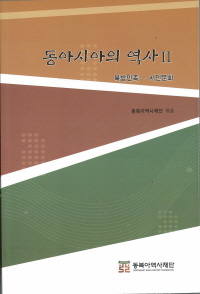
1. The Northeast Asian History Foundation owns the copyright to files located on this homepage.
2. Unauthorized reproduction and copying in any way or form are prohibited.
Book Title: East Asian HistoryⅡ : Northern Peoples - Popular Culture
Northeast Asian History Foundation | 148mm x 225mm | Single Volume Edition | 439 pages |6,000 won | December 15, 2011
ISBN
978-89-6187-256-0 94910
Foreword
Chapter 3 The Improvement of Productivity and the Replacement of the Ruling Class - From the 10th to the 16th Centuries
1. The Development of Northern Peoples and the Conquering Dynasty_ LIM Sang Sun (林相先)
Ⅰ. Introduction: Northern Peoples and the Conquering Dynasty
Ⅱ. The Development of Khitan (契丹) and its Relations with Neighboring Countries
Ⅲ. The Development of Jin (金) and its Relations with Neighboring Countries
Ⅳ. The Development of Mongol (蒙古) and Yuan (元)
2. Improvement in Agricultural Production and Peasant Economy in the 10th to 16th-Century East Asian Society_ CHO Bok Hyeon (曺福鉉)
Ⅰ. The East Asian World during the 10th to 16th Centuries AD
Ⅱ. The Development of Agriculture
Ⅲ. Agricultural Management
Ⅳ. The Effects of Agricultural Development
3. Civil and Military Servants_ LEE Ik Joo (李益柱)
Ⅰ. Social Change and the Advent of a New Ruling Class
Ⅱ. The Government Official Selection Process
Ⅲ. The Development of History during the 14th to 16th Centuries
4. Neo-Confucianism_ KANG Moon Shik (姜文植)
Ⅰ. Introduction
Ⅱ. The Establishment of Neo-Confucianism
Ⅲ. The Establishment and Spread of Neo-Confucianism as a National Discipline
Ⅳ. The Regional Characteristics of Neo-Confucianism in East Asia
Ⅴ. Conclusion
Chapter 4 Changes in the International Order and the Establishment of Independent Traditions-From the 16th to 19th Centuries
1. The International War in East Asia in the Late 16th Century_ HA Woo Bong (河宇鳳)
Ⅰ. Introduction
Ⅱ. Rethinking the Name of the War
Ⅲ. Political Situations before the War
Ⅳ. The Developments of the Imjin War
Ⅴ. The Imjin War and Changes in the East Asian Community
Ⅵ. Aftereffects of the Imjin War: Impact and Memory
Ⅶ. Conclusion: Challenges and Prospects
2. Trade Networks and Silver Circulation in East Asia during the 16th to 18th Centuries_ KIM Dong Chul (金東哲)
Ⅰ. The Boom of Silver Mine Development in the 16th Century
Ⅱ. Silver Circulation in 16th-Century East Asia
Ⅲ. A Silver Trade Network driven by Private Trade in 17th-Century East Asia
Ⅳ. Changes in the Trade Network and Silver Distribution from the 1680s Onward
Ⅴ. The Trend of East Asian Trade from the 18th Century Onward
3. Population Growth and Society and Economy_ KO Dong Hwan (高東煥)
Ⅰ. Introduction
Ⅱ. Population Growth and Social Change
Ⅲ. Commercial and Industrial Development and Urban Growth
Ⅳ. Conclusion: Population Growth and Urbanization in the Three East Asian Countries
4. Popular Culture as the Unique Tradition of Countries_ KIM Moon Sik (金文植)
Ⅰ. The Establishment and Spread of Western Studies
Ⅱ. The Establishment of the School of Enlightenment
Ⅲ. The Establishment of the School of Historical Research
Ⅳ. The Establishment of Popular Culture
