
- Major ActivitiesMajor ActivitiesThe Northeast Asian History
Foundation is the center of
Northeast Asian history research - ResourcesResourcesThe Northeast Asian History
Foundation is the center of
Northeast Asian history research - NewsNewsThe Northeast Asian History
Foundation is the center of
Northeast Asian history research - IntroductionIntroductionThe Northeast Asian History
Foundation is the center of
Northeast Asian history research
-
Screen size
-

- Major Activities
- Resources
- News
- Introduction
- Website Guide
Resources
Publication
- Date 2014.01.07
- Hit 3065
1. The Northeast Asian History Foundation owns the copyright to files located on this site.
2. Unauthorized reproduction and copying in any way or form is prohibited.
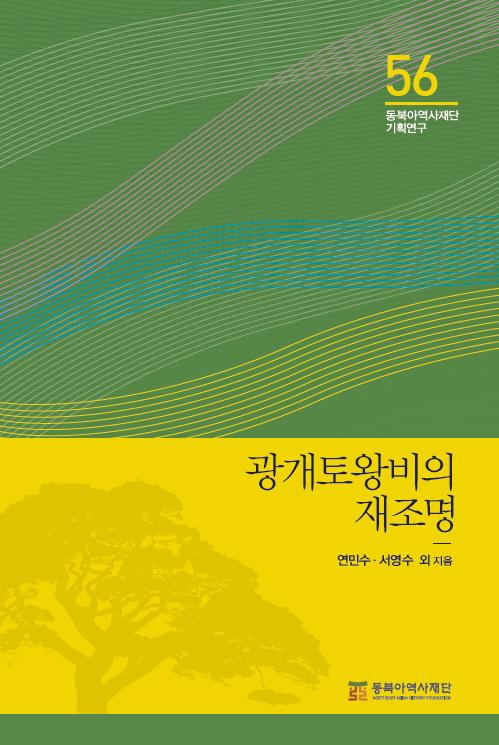
Title: The Gwanggaeto Stele Under a New Light
Written by Yeon Min-su, Seo Young-su et. al
Northeast Asian History Foundation | 148mm x 225mm | 520 pages | KRW 16,000 | May 31, 2013
ISBN 978-89-6187-303-1 93910
Contents
Part 1|Archaeological, Epigraphic and Linguistic Review of the Gwanggaeto Stele's Inscription
● Problems in Studying the Gwanggaeto Stele _ Takeda Ukio
Ⅰ. Two Challenges to Studying the Stele
Ⅱ. The Issue of Interpreting the ‘Shinmyo (391 AD)’ Passage
Ⅲ. Various Ink Copies and Lime Rubbed Copy ‘Ink Application Patterns’
Ⅳ. Determining the Types of Various Rubbed Copies
Ⅴ. The In-depth Study of Raw Stone Rubbed Copies
● The Site of Koguryo's Capital Gungnaeseong - Focusing on Maps and the Mausoleum Inscription _ CHO Beob-jong
Ⅰ. Introduction
Ⅱ. Gungnaeseong in Maps from the Joseon Period
1. The Gungnaeseong Area in the Geonjugijeongdogi
2. The Gungnaeseong Area in Haedongjido
3. The Gungnaeseong Area at Pyeongan Province in Paldojido 'Gochuk 4709-48'
4. Gungnaeseong at Ganggyebu of Pyeongan Province in Dongyeokdo and Gwangyeodo
5. Gungnaeseong in Daedongyeojido and Dongyeodo
Ⅲ. The Site of Gungnaeseong in Atlases and Maps of the Jian Area
1. Jian-hyeon Hyangtoji (ROC era Year 4, 1915)
2. The Gungnaeseong Area depicted in Jian Hyeonji (ROC era Year 20, 1931)
3. The Gungnaeseong Area in Japanese Maps and Materials
4. A Review of Maps and Materials of Jilin Province in Jian-hyeon Munmulji (1984) and The Maps of Chinese Culture
Ⅳ. Principles of Identifying King Gwangaeto's Mausoleum and the Site of Gungnaeseong
1. Principles of Identifying Tombs in relation to King Gwanggaeto's Reform of the Tomb Caretaking System
2. The Jian Area and King Gungnaeseong's Mausoleum
Ⅴ. Conclusion
● Progress on the Archaeological Survey of Old Tombs of Koguryo _ Sun Lenjie
Ⅰ. Archaeological Survey of the Complex of Tombs in Hao Zi, Jian
Ⅱ. Archaeological Survey of the Flooded Area Near the Unbong Hydroelectric Power Plant in Jian
Ⅲ. Survey of Tombs in Maseon, Jian
1. The Western Complex of Tombs
2. The Eastern Complex of Tombs
● The Calligraphic Style of the Gwanggaeto Stele's Inscription _ KO Kwang-ui
Ⅰ. Introduction
Ⅱ. A Review of the History of Research on the Gwanggaeto Stele's Calligraphic Style
Ⅲ. The Cultural Background of Transcription in the Formation of the Gwanggaeto Stele's Calligraphic Style
Ⅳ. Conclusion: The Completion and Popularity of ‘The Gwanggaeto Stele's Calligraphic Style’
● The Gwanggaeto Stele from the Perspective of Epigraphy with a Focus on the Stele's Shape and Location _ LEE Woo-tae
Ⅰ. Introduction
Ⅱ. The Shape of the Stele
Ⅲ. The Location of the Stele
Ⅳ. The Origin of the Stele
Ⅴ. Conclusion
● A Study of the Gwanggaeto Stele's Inscription in Terms of the Korean Language _ KWON In-han
Ⅰ. Introduction
Ⅱ. Interpretation of the Inscription
1. Lineage from King Chumo to King Gwanggaeto (1·1·1~1·6·39)
2. King Gwanggaeto's Military Feats (1·7·1~3·8·15)
3. Tomb Caretaker System (3·8·16~4·9·41)
Ⅲ. The Stele's Value to the History of the Korean Language
1. In Terms of Phonological History
2. In Terms of Grammatical History
3. In Terms of Vocabulary History
Ⅳ. Conclusion
Part 2|International Relations in East Asia during King Gwanggaeto's Reign (1)
● Koguryo's View of the Southern World as Represented in the Gwanggaeto Stele _ YEON Min-su
Ⅰ. Introduction
Ⅱ. The Formation and Dual Structure of the View of Baekje
Ⅲ. Wa Soldiers and the Perception of Wa
Ⅳ. Silla as Subjects and Tribute
Ⅴ. Conclusion
● Wa’ Appearing in the Gwanggaeto Stele _ Suzuki Yasutami
Ⅰ. Introduction Ⅱ. A History of Studies on the Gwanggaeto Stele and Its Rubbed Copies Ⅲ. Facts of the Wa Article Ⅳ. ‘Wa’ Appearing in the Gwanggaeto Stele
● Koguryo and Gaya on the Gwanggaeto Stele's Inscription: With Baekje's Reaction at the Center_ LEE Yong-hyeon
Ⅰ. Introduction
Ⅱ. The Inscriptions
Ⅲ. A Study of Related Articles
1. Youngrak Year 6 (396 A.D.)
2. Youngrak Year 9 (399 A.D.)
3. Youngrak Year 10 (400 A.D.)
4. Youngrak Year 14 (404 A.D.)
5. Youngrak Year 17 (407 A.D.)
Ⅳ. King Gwanggaeto's Southward Expansion and the Response of Southern Countries
1. Koguryo's Southward Expansion and Baekje's Defeat
2. Baekje's Reaction: 'Harmony’ and Rear Attack
3. Koguryo's Re-invasion of Baekje and Ending their 'King-Servant' Relationship
Ⅴ. Gaya in the Gwanggaeto Stele's Inscription: In Place of a Conclusion
● In Succession to King Gwanggaeto's Achievements-The Rule of Koguryo During the Early King Jangsu Period and Relocation of the Capital to Pyeongyang _ Hamada Kosaku
Ⅰ. Introduction
Ⅱ. King Jangsu's Name and the Years of His Birth and Death
Ⅲ. King Gwanggaeto's Achievements and Teachings
Ⅳ. Relocation of the Capital and Rule over Subjects
Ⅴ. Conclusion
Part 3|International Relations in East Asia during the King Gwanggaeto Period (2)
● King Gwanggaeto's National Development Policy and its Contemporary Implications _ YUN Myeong-cheol
Ⅰ. Introduction
Ⅱ. Challenges Facing the Korean People Today–Race and Foreign Relations
1. The Issue of Unification
2. The Issue of Reorganizing Order in East Asia
Ⅲ. King Gwanggaeto's National Development Policy and Its Result
1. The Shift in International Order and the Process of Territorial Expansion
2. King Gwanggaeto's Territorial Expansion
Ⅳ. The Nature and Significance of National Development Policy
1. The Core of Politics and Diplomacy–Balance and Coordination
2. The Hub of Economy and Distribution–Collection, Distribution and Intermediary Trade
3. The Base of Culture–Convergence and Recreation
Ⅴ. Significance and Value Today–�Suggestions in Place of a Conclusion
● The Relationship between Koguryo and the Late Yuan Dynasty in the Late 4th Century-Focusing on the Late Yuan's Investiture of King Gwanggaeto in 396_ LEE Seong-je
Ⅰ. Introduction
Ⅱ. Reexamination of the Theory of Koguryo's Possession of Liadong
Ⅲ. Changes in the International Political Landscape Surrounding the Liadong Region and the Late Yaun's Investiture of King Gwanggaeto
Ⅳ. The Investiture-Tribute Relationship between Koguryo and the Late Yaun and its Meaning
Ⅴ. Conclusion
● King Gwanggaeto's Conquest of Paeryeo and Inspection Trip to Liadong _ SEO Young-su
Ⅰ. Introduction
Ⅱ. The Organization of the Inscription and the Articles Concerning the North
1. The Article of Youngrak Year 5
2. The Article of Youngrak Year 8
3. The Article of Youngrak Year 17
4. The Article of Youngrak Year 20 and the Concluding Article
Ⅲ. The Nature and Details of the Campaign to Conquer Paeryeo
1. The Identity of Paeryeo and the Location of Yanshuigou
2. The Nature of the Article on the Conquest of Paeryeo
Ⅳ. The Historical Significance of the Inspection Trip to Liadong
1. King Gwanggaeto's Inspection Trip to Liadong
2. The Historical Significance of King Gwanggaeto's Conquest of Paeryeo and Inspection Trip to Liadong
Ⅴ. Conclusion
Part 4|The Background of Building the Gwanggaeto Stele and the Tomb Caretaking System
● The Nature and Purpose of the Gwanggaeto Stele _ KIM Hyeon-suk
Ⅰ. Introduction
Ⅱ. The Location of the Gwanggaeto Stele and the Contents of the Stele's Inscription
Ⅲ. The Nature of the Gwanggaeto Stele
Ⅳ. The Purpose of Building the Gwanggaeto Stele
Ⅴ. Conclusion
● Ancient China's Tomb Caretaking System and Law-References for Understanding Koguryo's System for Tomb Caretakers_ KIM Taek-min
Ⅰ. Introduction
Ⅱ. The Construction and Organization of Guards for the Ancient Chinese Emperors' Tombs
1. The Construction of the Emperors' Tombs and the Establishment and Abolition of Towns for Tomb Caretakers
2. The Gravekeeping Organization of the Successive Dynasties
Ⅲ. Laws Related to Royal Tombs
1. Hanui and Gosa
2. The Penal Code on Caretaking of Royal Tombs
Ⅳ. The Status of Town Name/Tomb Name –In Place of a Conclusion
