
- Major ActivitiesMajor ActivitiesThe Northeast Asian History
Foundation is the center of
Northeast Asian history research - ResourcesResourcesThe Northeast Asian History
Foundation is the center of
Northeast Asian history research - NewsNewsThe Northeast Asian History
Foundation is the center of
Northeast Asian history research - IntroductionIntroductionThe Northeast Asian History
Foundation is the center of
Northeast Asian history research
-
Screen size
-

- Major Activities
- Resources
- News
- Introduction
- Website Guide
Resources
Publication
- Date 2015.03.23
- Hit 1296
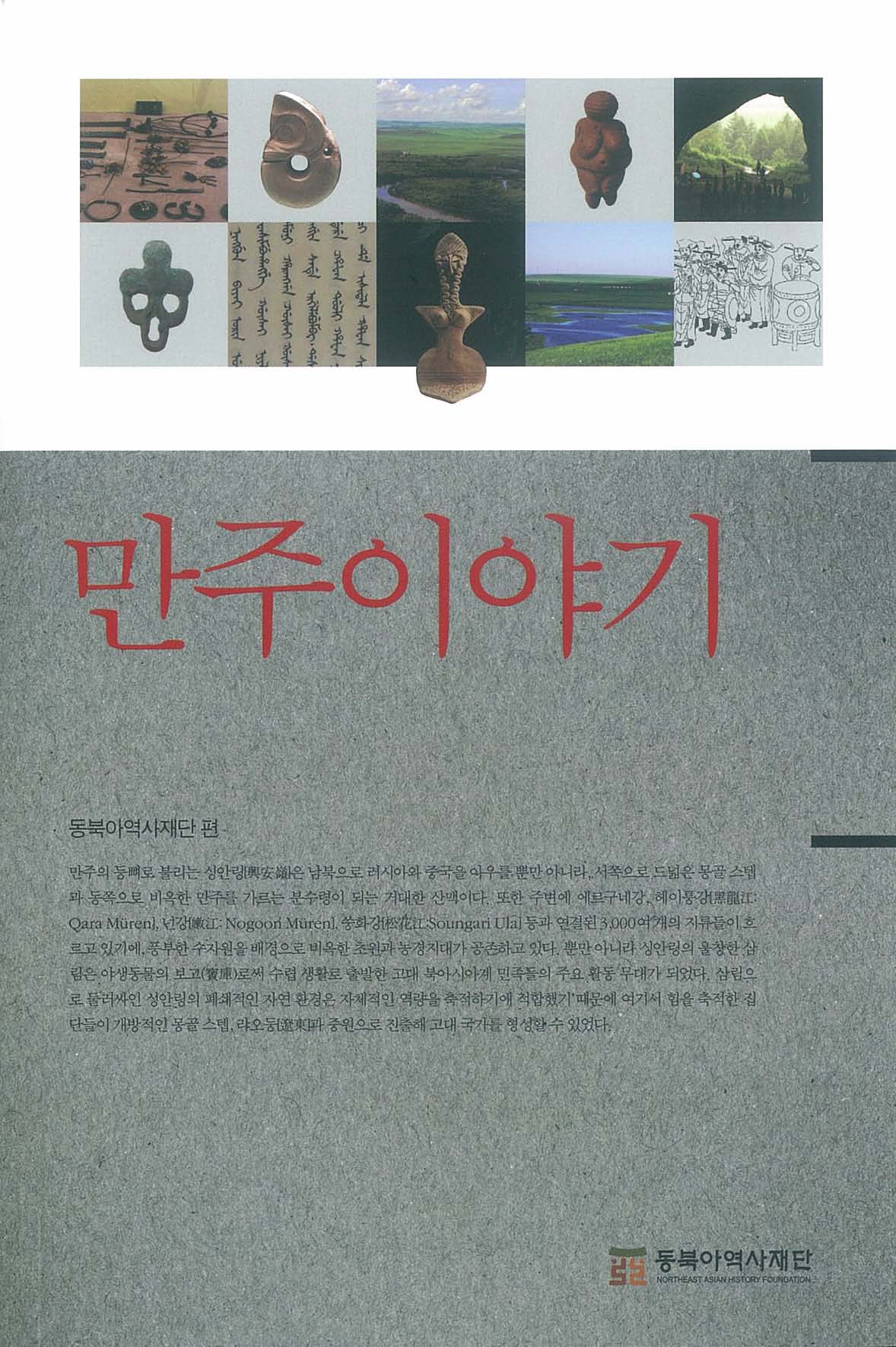
1. All rights reserved by the Northeast Asian History Foundation
2. No part of the files on this website may be reproduced and/or copied in any way, shape, or form without permission.
Title: Stories of Manchuria
Northeast Asian History Foundation
Northeast Asian History Foundation | 225*152mm (A5 New) | 376 pages | KRW 16,000 | September 5, 2013
ISBN 978-89-6187-305-5 93910
Contents
1. The People of Manchuria|YOON Eun-sook
Ⅰ. Hsingan Ling, a Historical Cradle of the Northern Peoples
Ⅱ. Tuoba Xianbei’s Southward March, the Beginning of a New History
Ⅲ. Where Did the Yemaek Live?
Ⅳ. Where Did Mongols Come From?
Ⅴ. Who Are the Barbarians?
2. The Manchu Language and Letters |YEON Kyu-dong
The Extinct Manchu Language
The Beginning of the Manchu Language
The Process of the Manchu Language’s Extinction
The History of the Manchu Letters
Bithesi, or Clerks
Translation of Chinese Classics into the Manchu Language and Compilation of Dictionaries
The Manchu Language and the Sibe language
The Manchu Language and the Jurchen Language
The Jurchen Language in the Annals of the Joseon Dynasty, etc.
The Jurchen Letters
The Languages of Sushen, Yilou, Wuji, and Mohe
The Manchu Language and the Manchu-Tungus Language Family
The Manchu Language and the Altaic Languages
The Altaic Convergence Theory
Systematic Classification of Languages
Language Comparison
The Manchu Language and the Korean Language
Language in the Old Manchuria
3. Folk Culture in Ancient Manchuria|JANG Jun-hee
Ⅰ. Folk culture in Northeast China, the prototype of Manchurian culture
Ⅱ. Culinary Culture Diversified through Agriculture and Hunting
Ⅲ. Houses with Three Different Spaces (West, Middle, East) and Heated Floors
Ⅳ. Simple and Elegant Qipao and the Northern-style Dress Culture
Ⅴ. Surviving Ethnicity in Traditional Holidays and Seasonal Customs
Ⅵ. Marriage Culture: Spouse Selection through Dancing and Singing
Ⅶ. Shamanistic Inhumation and Funeral Culture
4. Religious Culture in Old Manchuria|CHOI Joon
Ⅰ. Introduction
Ⅱ. The Origin of the Dragon: The First Dragon of China
Ⅲ. Birth of the Goddess and Shaman
Ⅳ. Why Was the King of Buyeo Murdered?
Ⅴ. Descendant of Heaven [子孫] and Son of Heaven [天子]
Ⅵ. Conclusion
5. Myths in Manchuria|KIM Seon-ja
Ⅰ. Manchuria, its Land and Myths
Ⅱ. Myth Related to the Bow
Ⅲ. The Myth of the Tree
Ⅳ. Goddesses of Light Fighting Against Darkness
Ⅴ. Animal-Related Myths
Ⅵ. Conclusion
6. Prehistoric Archaeology in Manchuria|KIM Jung-yeol
Ⅰ. Introduction
Ⅱ. Archaeological Studies in Manchuria
Ⅲ. The Advent of the Human Race and the Formation of Early Settlements
Ⅳ. The Ancient City of God (神市) in Niuheliang
Ⅴ. Neolithic Culture East of the Liao River
Ⅵ. Bronze Culture and its Society in the Liaoxi Region
Ⅶ. Bronze Culture and its Society in the Liaodong Region
Ⅷ. Conclusion
7. A Study of the So-Called ‘Statue of Goddess’ Unearthed at the Liao River Basin|JANG Seok-ho
Ⅰ. Human Form Statues Unearthed from Niuheliang and Dongshanzui in Liaoning Province, China
Ⅱ. Female Statues around the World from Prehistoric Times
Ⅲ. Characteristics of Venus Figurines from Prehistoric Times
Ⅳ. Is the Human Form Statue Unearthed from the Liao River basin a Female?
Ⅴ. Conclusion
8. Music Culture in Ancient Manchuria|PARK So-hyun
Ⅰ. Ancient Music of Continental China: The Fruit of Oriental and Western Music Culture
Ⅱ. Music Culture of Minor Ethnicities and Altaic Folk Songs
Ⅲ. The First Ancient Musician Featured in Petroglyphs
Ⅳ. Shaman Song of God (神歌) and Drum[鼓]
Ⅴ. The Limitations of Ancient Manchuria’s Music Culture
9. Natural Environment of Manchuria|KIM Ju-yong
Ⅰ. Introduction
Ⅱ. Built Environment of Manchuria
Ⅲ. Topography and Vegetation of Manchuria
Ⅳ. Geology and Tectonic Structure of Manchuria
Ⅴ. Volcanic Activities of Manchuria: Mt. Changbai (Baekdu) Area
Ⅵ. Environment of Manchuria in the Fourth Age
Ⅶ. Dry Topography of Manchuria
Ⅷ. Lakes and Swamps of Manchuria and its Changes
Ⅸ. Changes in the Old Environment of Lake Xingkai in Manchuria
Ⅹ. Changes in the Old Environment of Lake Jingpo in Manchuria
Ⅺ. Outlook for Research on the Lakes and Swamps of Manchuria
Ⅻ. Conclusion
