
- Major ActivitiesMajor ActivitiesThe Northeast Asian History
Foundation is the center of
Northeast Asian history research - ResourcesResourcesThe Northeast Asian History
Foundation is the center of
Northeast Asian history research - NewsNewsThe Northeast Asian History
Foundation is the center of
Northeast Asian history research - IntroductionIntroductionThe Northeast Asian History
Foundation is the center of
Northeast Asian history research
-
Screen size
-

- Major Activities
- Resources
- News
- Introduction
- Website Guide
Resources
Publication
- Date 2015.03.24
- Hit 1060
1. All rights reserved by the Northeast Asian History Foundation
2. No part of the files on this website may be reproduced and/or copied in any way, shape, or form without permission.
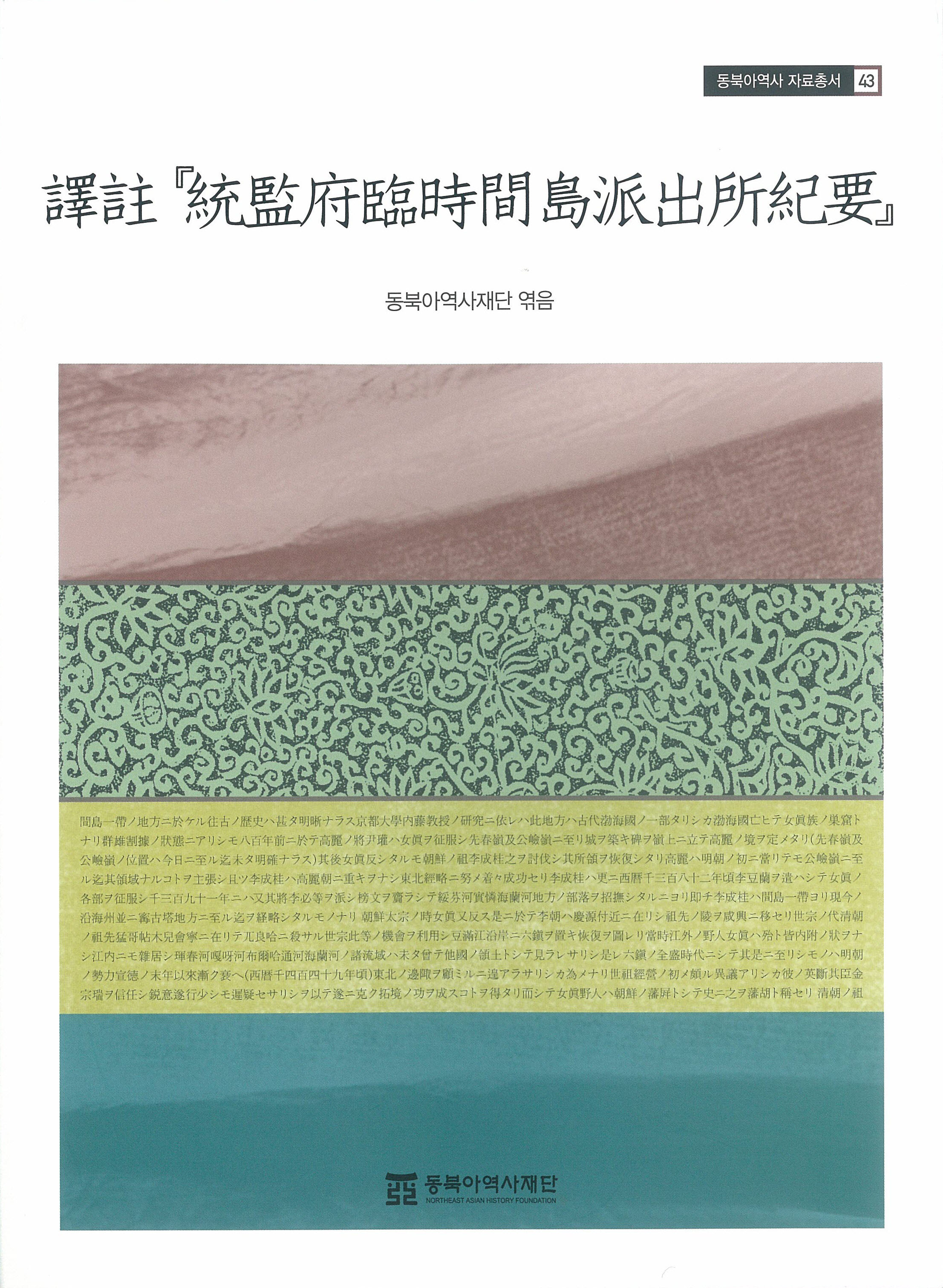
Title: Annotated Translation of Tōkanfu Rinji Kantō Hashutsujo kiyō
Edited by the Northeast Asian History Foundation
Northeast Asian History Foundation | 4x6 | 560 pages | KRW 19,000 | December 31, 2013
ISBN 978-89-6187-323-9 93910
Contents
Annotation: The Installment of a Temporary Office at Kanto by the Japanese Residency General and Boundary Disputes over Kanto
Chapter 1History of the Kanto Issue
Section 1 History of the Kanto Region
Section 2 Erection of the Mt. Baekdu Boundary Monument
Section 3 Boundary Negotiation in Year 11 of Emperor Guangxu
Section 4 Boundary Negotiation in Year 13 of Emperor Guangxu
Section 5 Negotiation between Qing and Korea from Year 14 of Emperor Guanxu onward
Chapter 2 Organization of the Office
Chapter 3 Survey at Kanto
Section 1 Provisional Boundary of Kanto
Section 2 Topography and the Ratio of Qing to Korean Residents
Section 3 Transportation
Section 4 Overview the Qing Government’s Rule
Section 5 State of Residents
Section 6 Produce and Commerce
Section 7 Submission of Opinions about the Future
Chapter 4 Opening of the Office
Chapter 5 Research on the Kanto Boundary Issue
Section 1 Introduction
Section 2 Compilation of the History of the Qing-Korea Border Issue
Section 3 Field Study of the Mt. Baekdu Boundary Monument and the Tumen River
Section 4 Field Exploration to Determine the Existence of Border Stones
Section 5 Research on the Opinion of Hayashi Gonsuke, the Japanese Minister to Korea
Section 6 Investigation into Ji Chang-han, former Governor of Musan County
Section 7 The Qing Government’s Opinion about the “Note on the Kanto Boundary Issue“
Section 8 Investigation into Historical Remains
Chapter 6 Facilities to Protect Korean Citizens
Section 1 Policies of Administration
Section 2 Placement of Korean Officials and Local Tribute Clerks
Section 3 Placement of Military Police and Korean Police Officers
Section 4 Pacification of Public Sentiment
Section 5 Control over Koreans with anti-Japanese Thought
Section 6 Caution against Rioters
Section 7 Protection against Violence and Unfair Requisition by Qing Troops
Section 8 Conduct of Census and Preparation of Census Register
Section 9 On Education, Religion, and Sanitation
Section 10 Communication and Transportation
Section 11 Operations of the Kanto Charity Hospital
Section 12 Prevention of Enzootic Disease (獸疫)
Section 13 Opening of Markets
Section 14 Increase of Immigrants
Chapter 7 Trial Jurisdiction
Section 1 Jurisdiction over the Japanese
Section 2 Jurisdiction over the Koreans
Chapter 8 Attitude of the Qing Authorities
Section 1 Establishment of a Public Office for Boundary Affairs (邊務公署) and a Branch Office (派辦處)
Section 2 Increase in Armed Forces and Police Officers
Section 3 Interference with Our Facilities
Section 4Qing Authorities’ Pressure on Us and the Branch Office’s Decision about It
Chapter 9 Repeated Incidents Requiring Negotiation with Qing Authorities
Section 1 Introduction
Section 2 The Tianbao shan (天寶山) Incident
Section 3 Denied Entry into the Forest
Section 4 Fight between Japanese and Chinese people
Section 5 Removal of Signposts
Section 6 Interference with Our Military Police in Performing Their Duty
Section 7 Slander against Korean Officials
Section 8 Anti-Japanese Instructions to Students
Section 9 Forcing the Qing Hairstyle on Koreans
Section 10 Interference with Ferriage on the Duman River
Section 11 Incident of the Decree Banning Grain Exportation
Section 12 Assault on Chinese Soldiers in mid September of Year 41 of the Meiji Era
Section 13 Assault on Chinese Soldiers at Juzijie (局子街)
Section 14 The Yuji dong (禹跡洞) Incident
Section 15 Enforcement of the Act on Salt Monopoly
Section 16 Clash at Fushaping (伏沙坪)
Section 17 Interference with the Construction of a Police Patrol Shelter
Section 18 Clash at Tailazi (太拉子)
Section 19 Detention of the Japanese
Section 20 The Statement on Korea’s Territorial Rights
Chapter 10 Exploration of Western Kanto
Section 1 Topography
Section 2 Roads and Transportation
Section 3 Area of the Korean Enclave
Section 4 History of the Chinese Korean’s Migration
Section 5 State of the Qing Administration
Section 6 Estimated Numbers of Households and Land Owners
Section 7 General Status of Agriculture
Section 8 Overview of Gold Mines (砂金鑛) and Forests
Chapter 11 Surveys of Industries
Section 1 Survey of Agriculture
Section 2 Survey of Geological Mines
Section 3 Survey of Commerce
Chapter 12 Evacuation of the Branch Office
Section 1 Announcement of the China-Japan Treaty Regarding Kanto and Pacification of the Public Sentiment
Section 2 Closing Down Ceremony and Withdrawal of the Military Police
Chapter 13 Guarding the Branch Office
List of Employees
Appendix
Index
