
- Major ActivitiesMajor ActivitiesThe Northeast Asian History
Foundation is the center of
Northeast Asian history research - ResourcesResourcesThe Northeast Asian History
Foundation is the center of
Northeast Asian history research - NewsNewsThe Northeast Asian History
Foundation is the center of
Northeast Asian history research - IntroductionIntroductionThe Northeast Asian History
Foundation is the center of
Northeast Asian history research
-
Screen size
-

- Major Activities
- Resources
- News
- Introduction
- Website Guide
Resources
Publication
- Date 2015.03.24
- Hit 1225
1. All rights reserved by the Northeast Asian History Foundation
2. No part of the files on this website may be reproduced and/or copied in any way, shape, or form without permission.
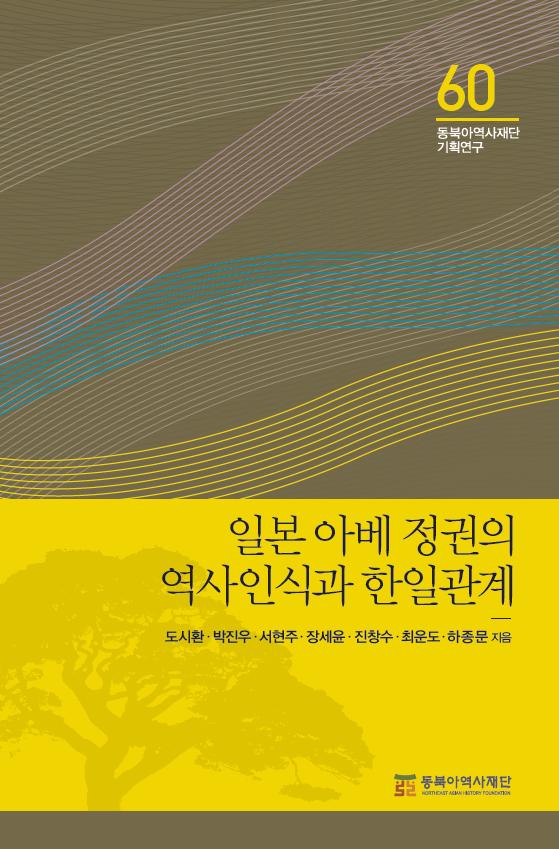
Title: Japan’s Perception of History under the Abe Administration, and Korea-Japan Relations
By DOH Shi-hwan, PARK Jin-woo, SEO Hyun-joo, CHANG Se-yun, JIN Chang-soo, CHOI Woon-do, HA Jong-moon
By DOH Shi-hwan, PARK Jin-woo, SEO Hyun-joo, CHANG Se-yun, JIN Chang-soo, CHOI Woon-do, HA Jong-moon
ISBN 978-89-6187-320-8 93910
Contents
● Changes in Japanese Politics and the Abe Administration’s Perception of History | JIN Chang-soo
Ⅰ. Perception of History among Conservatives and the First Abe Administration’s Significance in Political History
Ⅱ. The Second Abe Administration’s Attitude Toward History
Ⅲ. Supporters of the Abe Administration and Their Dilemma
Ⅳ. The Park Geun-hye Administration’s Direction of Policies toward Japan
● The Murayama Statement’s Significance and the Abe Administration | HA Jong-moon
Ⅰ. Introduction
Ⅱ. ‘History War’ in the Early 1990s
Ⅲ. No-War Resolution
Ⅳ. The Birth of the Murayama Statement
Ⅴ. History War Going Full Scale
Ⅵ. The Second Abe Administration’s Attack on the Murayama Statement
Ⅶ. History War Going International
Ⅷ. Conclusion
● To Logically Criticize the Yasukuni Issue | PARK Jin-woo
Ⅰ. Introduction
Ⅱ. Historical Relationship between Korea and the Yasukuni Shrine
Ⅲ. Background to the Rise of the Yasukuni Issue between Korea and Japan
Ⅳ. Korea’s Criticism of Visiting the Yasukuni Shrine and its Problems
Ⅴ. Conclusion
● and Outlook on ‘Comfort Women’ Descriptions in Japanese Middle and High School History Textbooks | SEO Hyun-ju
Ⅰ. Introduction
Ⅱ. Elements of Textbook Analysis
1. Curriculum and Teaching Guidebook
2. The Kono Statement and the Cabinet Decision by the First Abe Administration
Ⅲ. Trends of ‘Comfort Women’ Descriptions in Japanese History Textbooks
1. History Textbooks for Middle Schools
2. History Textbooks for High Schools
Ⅳ. Conclusion: Focusing on the Outlook
● Japanese Prime Minister Abe’s Denial of ‘Aggression’ and Colonial Responsibility | DOH Shi-whan
Ⅰ. Introduction
Ⅱ. Abe’s Denial of the Murayama Statement
1. Background to the Murayama Statement
2. The Murayama Statement and Abe’s Denial
3. Limitations and Problems of the Murayama Statement
Ⅲ. Review of the Definition of Aggression under International Law
1. 1974 UN General Assembly Resolution on ‘Definition of Aggression’
2. 2010 ICC Rome Statute on ‘Crime of Aggression’
3. Significance of the ‘Definition of Aggression’ under International Law
Ⅳ. Imperial Japan’s Colonial Responsibility and Historical Definition
1. Abe’s Perception of ‘Colonial Responsibility’
2. Raising the Question of ‘Colonial Responsibility’ and its History
3. Review of the Korea-Japan Treaty System and Colonial Responsibility
Ⅴ. Conclusion
● Japan’s Right of Collective Self-Defense and Constitutional Amendment | CHOI Woon-do
Ⅰ. Current Concept of the Right of Collective Self-Defense
Ⅱ. Changes in Constitutional Interpretation Regarding the Right of Collective Self-Defense and Conflicting Positions
1. The Course of Changes in Constitutional Interpretation
2. The Right of Collective Self-Defense Issue in the 2007 Report on Reconstruction of the Legal Basis for Security
3. Clash of Pros and Cons over the Right of Collective Self-Defense
Ⅲ. The Liberal Democratic Party’s Institutional Planning
1. Amendment by Changing Constitutional Interpretation
2. Use of Legislative Measures
3. Amendment of the Codified Constitution
Ⅳ. Problems with the Discussion of the Right of Collective Self-Defense
Ⅴ. Conclusion
● Exploring How to Resolve the Historical Conflict between Korea and Japan | CHANG Se-yun
Along with a Some Current Views
Ⅰ. Introduction
Ⅱ. Necessity to Resolve Historical Conflicts between the Two Countries
Ⅲ. Definition of ‘Reconciliation’
Ⅳ. Examples Reflecting the Gap in Perceptions of History between Korea and Japan
Review of the Terms ‘Waegu (Japanese Pirates)’ and ‘Joseon chongdokbu (Government-General of Korea)’
1. Definition of Waegu
2. A Standard Japanese Government-Compiled Dictionary on the ‘Joseon chongdokbu’
Ⅴ. A Few Ways to Resolve Historical Conflicts or to Spread Correct Perceptions of History
1. Differences and Issues between Korea and Japan about Perceptions of History
2. A Few Considerations
3. Review of the Operations of ‘The Third Korea-Japan Joint History Research Committee’
4. Problems with the Yushukan Museum within the Yasukuni Shrine and Activities by Japanese NGOs
Ⅵ. Closing Remark in Place of a Conclusion
Index
